You find your most flattering colors by comparing shades with your current skin, hair, and eye coloring. For women over 50, your best colors are the shades that make your complexion look clear and your features feel balanced today.
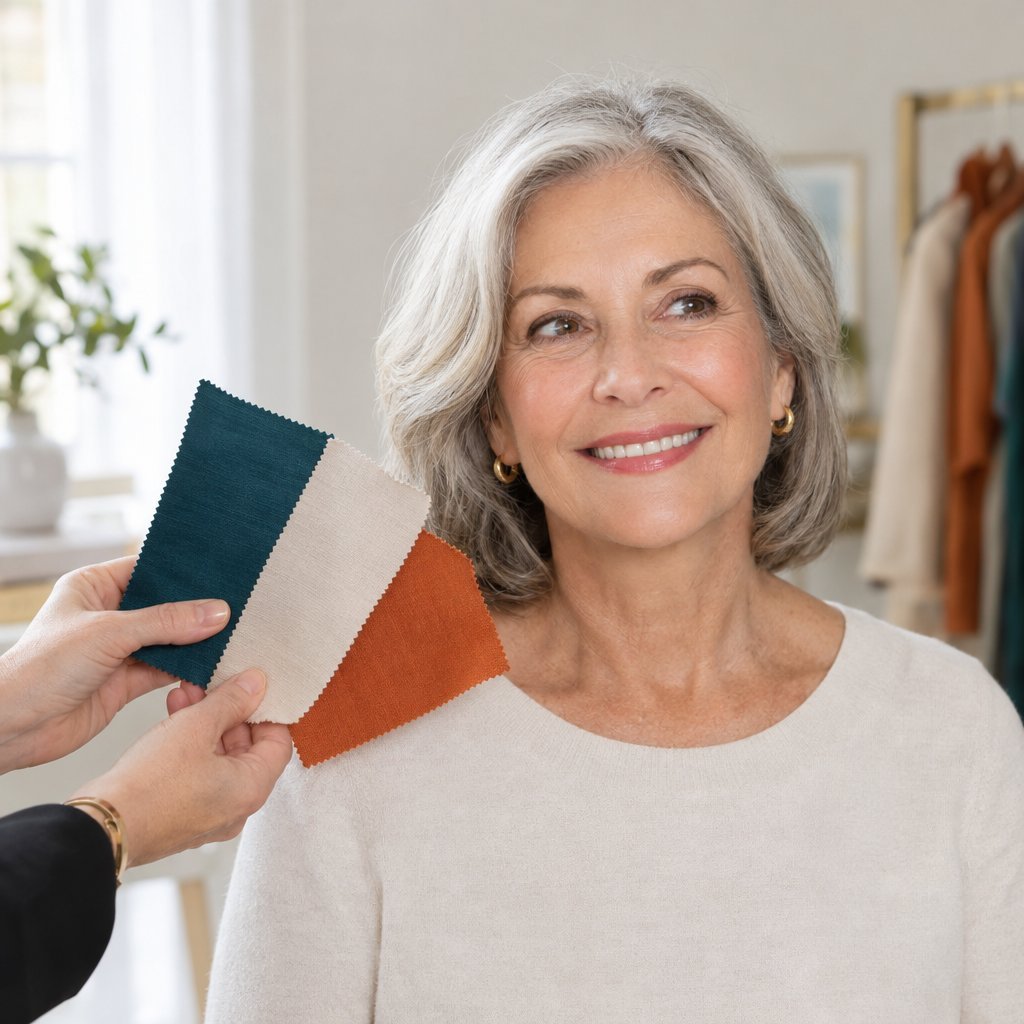
Changes in hair color, skin tone, and contrast can make familiar clothing shades look different over time. You can use color analysis to spot the hues that work with your current coloring and make getting dressed easier.
Key Takeaways
- Choose shades by how they look beside your face in natural light.
- Use your undertone and the contrast in your features as helpful clues.
- Keep favorite colors in your wardrobe and adjust their placement or pairing.
What Changes in Your Coloring After 50?
Your coloring can soften or shift as your hair, skin, and eyes change with age. That shift can affect how much contrast you see in your features and how strongly certain clothing colors stand out.

How Hair, Skin, and Eyes Can Shift
Your hair may become gray or white, or its natural color may look lighter. Skin can also change in tone and texture, while your eye color may seem less vivid as the contrast around it softens.
These changes affect the colors that frame your face. A shade that once matched the depth of your hair may now look too strong, while a softer version may bring your features forward.
Why Your Former Go-To Colors May Look Different
A favorite color can create a different effect when your coloring changes. Black, for example, may feel more dramatic beside silver hair or softer skin, while a deep navy or charcoal may give you a gentler contrast.
Check the color in daylight and notice what happens around your eyes and mouth. If the shade makes shadows seem more noticeable or leaves your face looking dull, try a lighter, softer, or warmer version before you retire it.
How Do You Find Your Most Flattering Colors?
You can find your strongest shades by checking undertone, looking at your natural contrast, and comparing fabric colors beside your face. A simple draping test gives you practical clues without requiring a strict seasonal label.

Identify Your Skin Undertone
Your undertone is the subtle warm, cool, or neutral cast beneath your skin’s surface. It can help guide your color choices, though the surface tone you see can change with sun exposure, redness, or other skin changes.
Compare warm and cool shades in daylight. Try coral beside rose, then ivory beside bright white. Notice which pair makes your skin look more even and your eyes look clearer. Use these comparisons as clues, not as a rigid test.
Use Hair and Eye Color as Clues
Your hair and eyes help show how much contrast your features can carry. Look at the difference between your skin, hair, and eyes: strong contrast can make clearer, deeper shades feel balanced, while softer contrast can pair well with muted colors.
Gray hair does not automatically place you in one palette. Your skin undertone and the depth of your eyes still help shape the shades that work near your face.
Try Color Draping at Home or With a Professional
For an at-home test, sit near a window with indirect daylight and wear a neutral top. Hold one fabric color under your chin, then switch to a nearby shade in a different temperature or depth. Keep makeup minimal so you can focus on your natural coloring.
Look for a shade that makes your complexion appear even and your features easy to see. A professional can guide this comparison with a wider set of drapes and help you identify a palette that fits your preferences.
Which Color Families Can Brighten Your Complexion?
Jewel tones, warm deep neutrals, and soft brightening shades give you useful starting points for a flattering palette. The best options are the versions that suit your undertone and feel comfortable beside your face.
Rich Jewel Tones
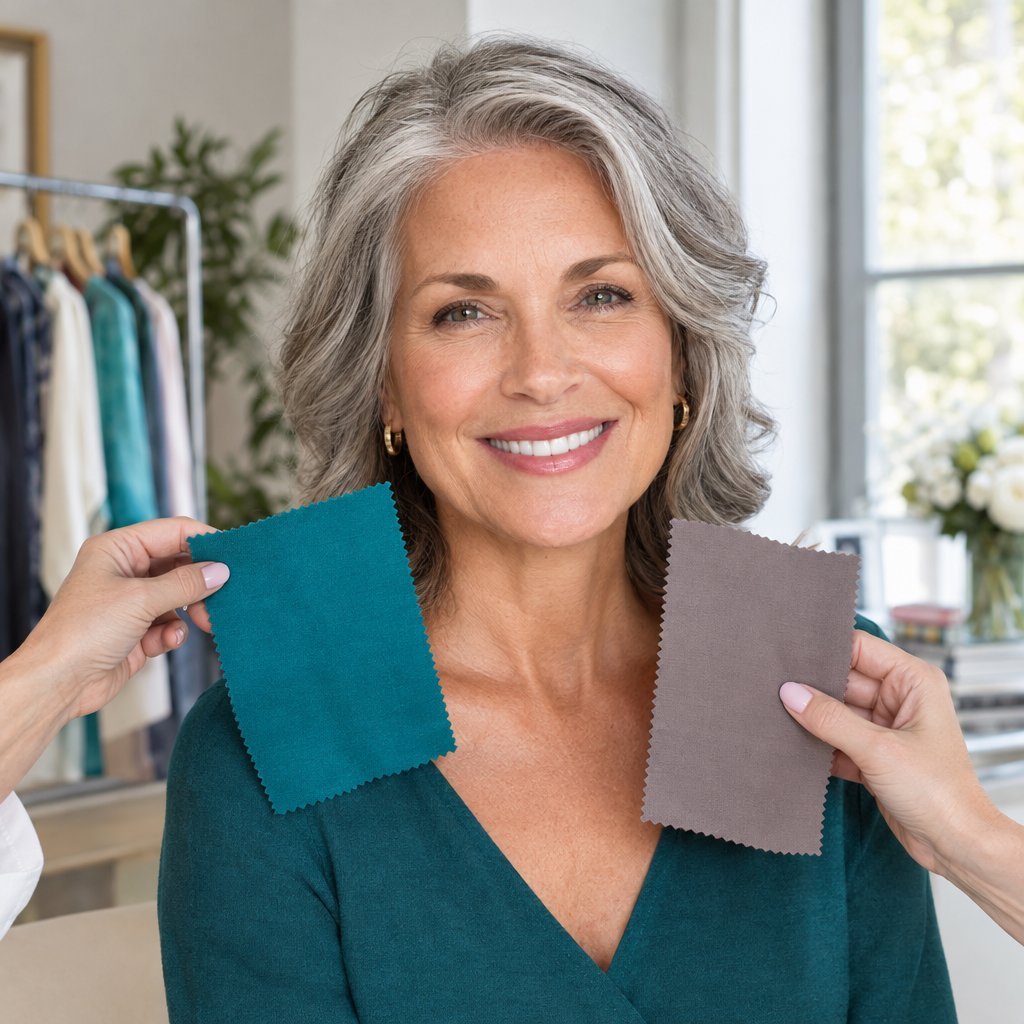
Sapphire, emerald, amethyst, and ruby can add depth and color near your face. If a jewel tone feels too intense, look for a softened version, such as muted teal or dusty plum.
You can test a color family by comparing two shades with different depths. A clear blue and a smoky blue, for example, can show whether your features look more balanced with brightness or softness.
Warm, Deep Neutrals
Chocolate brown, camel, olive, and warm navy offer options beyond black and gray. These shades work well as coats, trousers, and other wardrobe anchors when their warmth and depth suit your coloring.
Try a warm neutral beside your face before building an outfit around it. If the shade makes your skin look tired, choose a cooler or lighter alternative within the same color family.
Soft Brightening Shades
Rose, soft coral, powder blue, and gentle lavender can bring light near your face without strong contrast. These hues can work well in shirts, scarves, and cardigans.
The right version depends on your coloring. Compare a cool rose with a peachy pink, or a pale blue with a clearer blue, and keep the one that makes your skin look more even.
How Can You Make Your Palette Work in Everyday Outfits?
Your palette works best when you use it as a practical shopping and styling tool. Bring your strongest shades close to your face, then use your other favorite colors in pieces that sit farther away.

Wear Your Best Colors Near Your Face
Use your most flattering colors in tops, scarves, jackets, and earrings. These pieces frame your face, so their color has the clearest effect on the way your features look.
If you love a shade that feels too strong, wear it in a skirt, trousers, or shoes. A more flattering neckline color can balance the outfit while letting you keep the shade you enjoy.
Keep Colors You Love and Adjust How You Wear Them
You do not need to clear out every color that sits outside your palette. Pair a less flattering shade with one that brightens your face, or add a scarf, collar, or necklace in a more harmonious color.
You can also try a lighter or more muted version of a favorite hue. Small shifts in brightness and depth often make a color easier to wear.
Use a Palette to Make Wardrobe Choices Easier
Keep a short list of your best neutrals and accent colors on your phone or in your wallet. When you shop, compare new pieces with that list and with clothes you already wear.
A consistent set of colors helps pieces coordinate across outfits. Start with a few neutrals, then add colors you enjoy wearing near your face.
Let Your Current Coloring Guide Your Choices
Your current coloring gives you the clearest guide to choosing shades that flatter you now. Hair, skin, and eyes can change, so treat your palette as a flexible reference that can evolve with you.

Use fabric draping to compare colors in natural light, then wear the shades that make you feel comfortable and look balanced. Keep favorite colors in the mix by changing their placement or choosing a softer version.
Frequently Asked Questions

What colors look best on women over 50?
The best colors are the ones that complement your current skin undertone and the contrast in your features. Jewel tones, warm deep neutrals, and soft brightening shades are useful families to test.
Can I still wear black if it isn’t in my palette?
Yes, you can wear black in any way that feels right to you. If it looks stark near your face, try a softer neckline color, a scarf, or black in a lower-body piece.
Are there colors women should stop wearing after 50?
You do not need to stop wearing a color because of your age. Compare its shade and placement with your current coloring, then adjust the brightness or depth if it does not flatter you near your face.
Can a color analysis quiz identify my best colors?
A quiz can give you a starting point by asking about your hair, eyes, and skin. Treat its result as a guide, then check the suggested shades against your face in natural light.
Do I need a professional color analysis?
You can learn a lot through careful at-home draping, and a professional can help you compare shades and build a more specific palette. Choose the approach that fits your budget, interest, and comfort level.
