A petite-friendly no-sew hem starts with a careful shoe-on measurement and a flat fold. For how to hem pants at home for petite frames without a sewing machine, iron-on hemming tape is the easiest starting point for iron-safe pants because it secures a smooth fold without stitches.
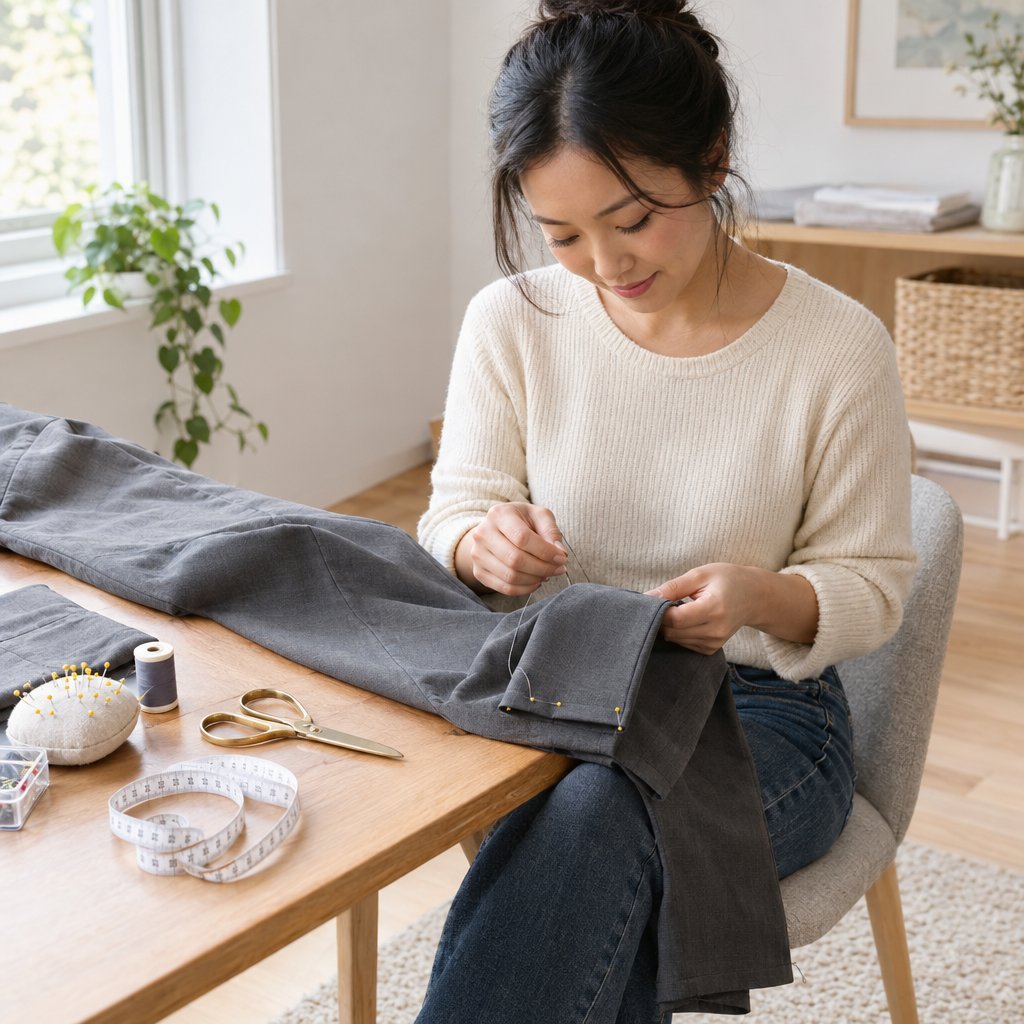
Choose tape for a clean finish you plan to keep, fabric glue for fabrics that need a lower-heat option, or clips and pins for a short-term adjustment. You can keep the original length intact with each method, which makes future changes easier.
Key Takeaways
- Try on your pants with the shoes you plan to wear.
- Keep the fold shallow to reduce bulk around your ankles.
- Check the product label before ironing, gluing, or washing.
Which No-Sew Hem Suits Petite Pants Best?
Iron-on hemming tape suits most iron-safe pants when you want a tidy, lasting fold. Fabric glue offers a heat-free option, while clips or pins work for temporary adjustments.
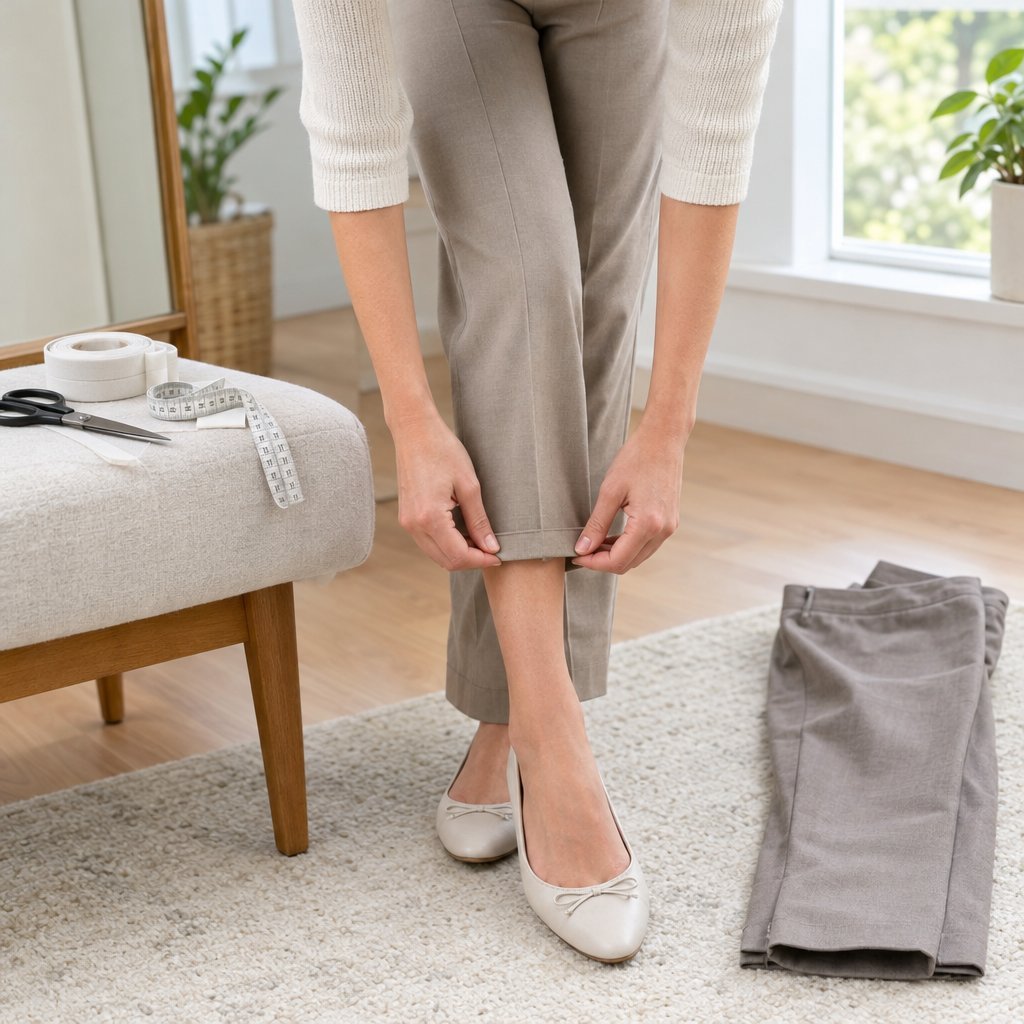
For petite pants, a narrow, even fold helps preserve the leg’s shape and keeps extra fabric from bunching at the ankle. Check the care label and test your chosen method on an inside seam before treating the full hem.
When Is Iron-On Hemming Tape the Best Choice?
Choose iron-on hemming tape for cotton, denim, and other fabrics whose care labels allow ironing. The tape sits between the folded hem and pant leg, creating a flat bond that suits straight-leg trousers and jeans.
Use tape made for the weight of your fabric, and follow its package directions for heat and pressing time. A pressing cloth helps protect the fabric, while a hidden-area test checks for shine or color changes. Delicate fabrics, coated materials, and heat-sensitive synthetics need a different method.
When Should You Use Fabric Glue?
Fabric glue is a useful option when your pants cannot take the heat required for iron-on tape. Select an adhesive labeled for fabric and suitable for the material, then test it on a hidden area first.
Apply a thin line inside the fold and press the layers together as directed on the label. Too much glue can soak through and leave a stiff mark, so keep it away from the visible outer surface. Let the bond dry fully before wearing the pants.
How Can a Folded Hem or Cuff Work as a Temporary Fix?
A folded hem gives you a quick, adjustable change that works well for a fitting check or a one-day fix. Fold the extra length inside the leg for a discreet look, or turn it outward as a cuff if that suits the pants.
Smooth the fold around the full leg, then secure it with small clips or discreet safety pins placed inside the fabric. Walk and sit in the pants before wearing them out; movement can loosen an unsecured fold.
How Should You Measure a Petite Hem?
Measure your pants while wearing the shoes you plan to pair with them, then mark each leg while the fabric hangs naturally. A consistent, shallow fold helps keep petite proportions balanced.
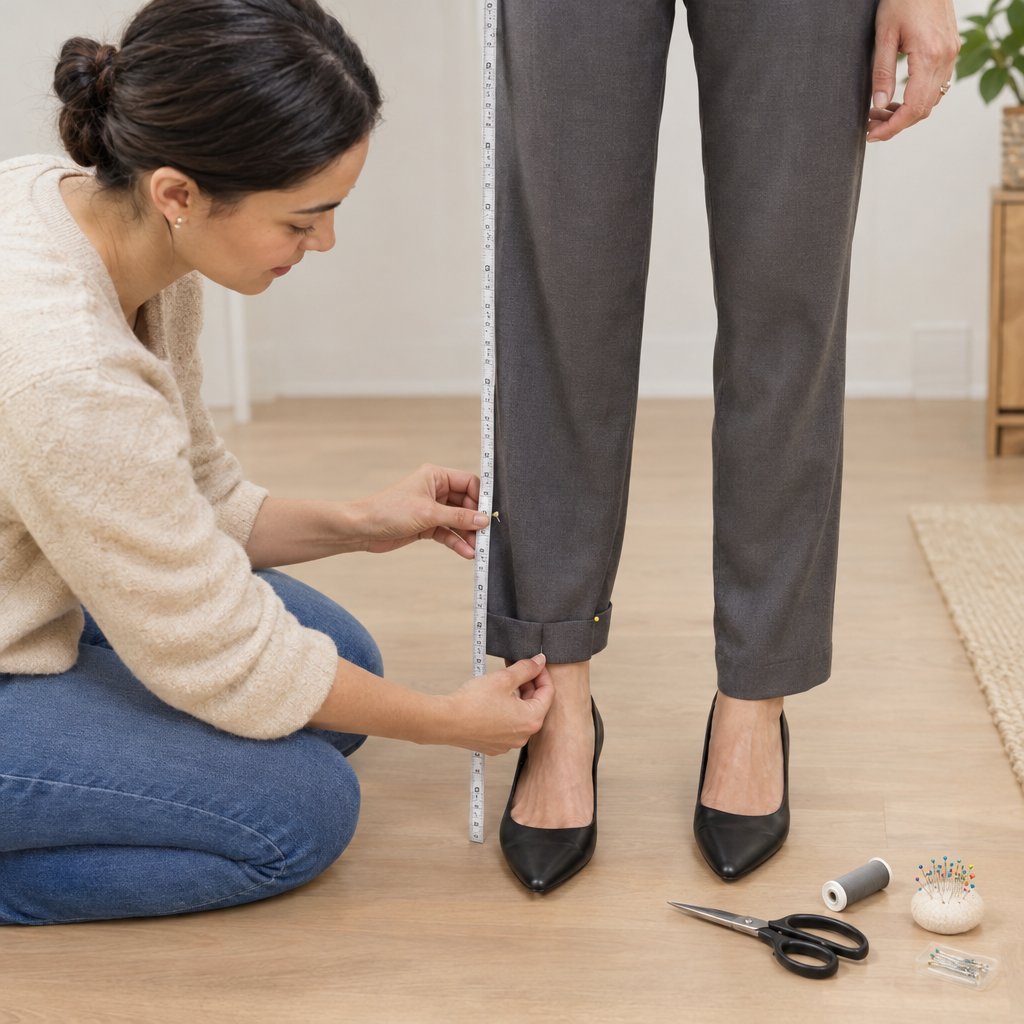
Use a full-length mirror and a flexible tape measure or ruler. Mark the finished edge first, then decide how much fabric to fold up based on your chosen method and the width of its tape or glue area.
How Do Shoes Change the Right Pant Length?
The height and shape of your shoes affect where the hem falls, so wear the pair you expect to use with the pants. A hem that clears flat shoes may ride too high with boots, while extra length can bunch around low-profile sneakers.
Stand with your weight evenly balanced and let the pant legs settle. For wide-leg pants, aim for a hem that skims near the top of your shoe; for tapered pants, check that the hem clears the ankle without catching underfoot.
How Can You Mark Both Legs Evenly?
Mark the finished length on each leg while you are wearing the pants, then take them off and lay them flat. Measure from the floor or a consistent point on each leg, and compare the marks before folding.
Use tailor’s chalk or a washable fabric marker to draw a short guide line around each leg. Check the side seams and inseams as you fold; keeping the fold parallel to the original hem helps prevent a slanted finish.
Why Preserve the Original Hem When Possible?
Keeping the original hem gives you room to restore the pants to their previous length later. This is especially useful when you are unsure about the final length or want to wear the pants with different shoes.
Fold the excess fabric inside the leg and secure it there. Avoid trimming the fabric, and use a removable method if you expect to adjust the length again.
How Do You Hem Pants Without Cutting?
You can shorten pants without cutting by folding the extra fabric inside the leg and securing the fold with tape, glue, or temporary fasteners. Choose the method that suits the fabric and how long you need the hem to hold.
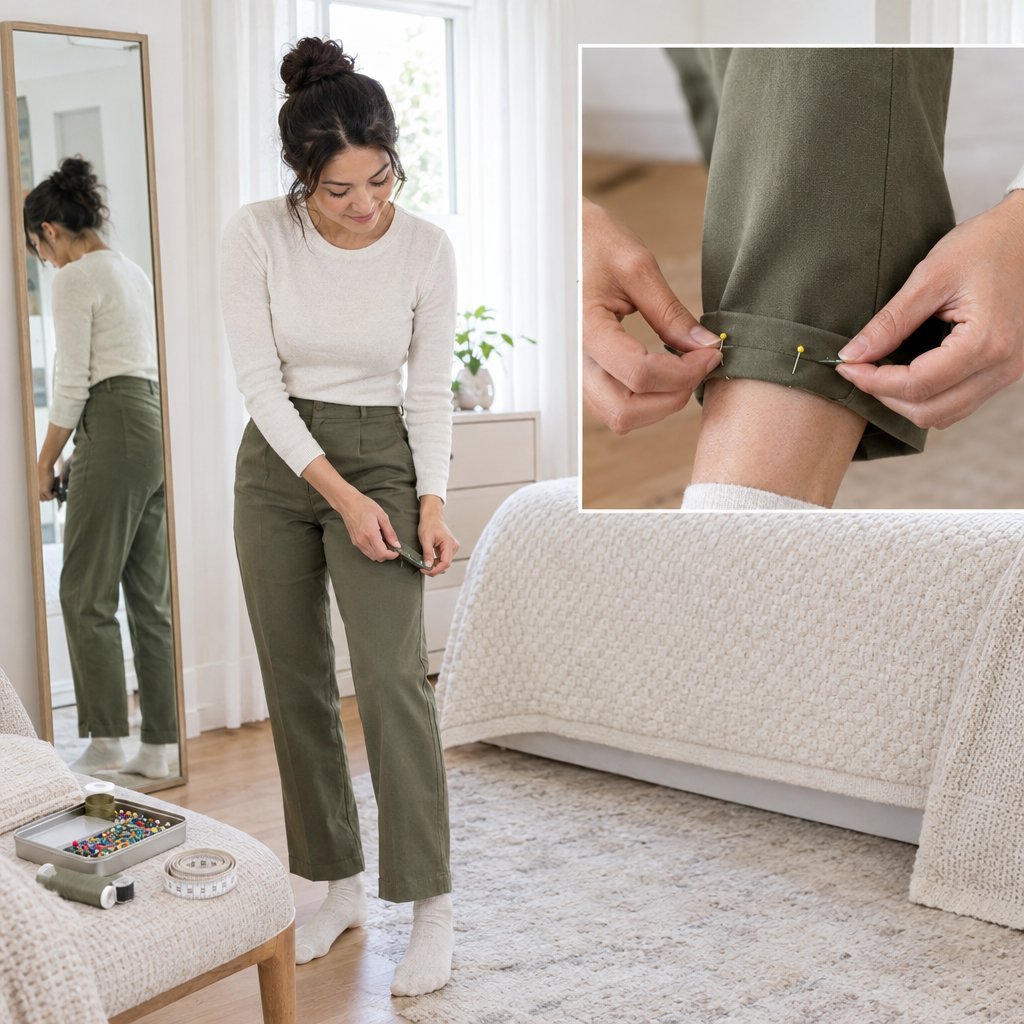
Before securing the fold, turn the pants inside out and smooth out wrinkles. Keep the fold depth even around each leg, then check the result with the pants right side out.
How to Make a Folded Hem with Iron-On Tape
Iron-on tape creates a smooth hem when the fabric tolerates heat. Follow the tape package directions, since heat settings and pressing times vary.
- Turn the pants inside out and fold each leg to the marked length.
- Press the fold gently to set a crease, using a pressing cloth if needed.
- Place the tape inside the fold, between the folded fabric and the pant leg.
- Press in short sections, lifting and setting the iron according to the tape directions.
- Let the hem cool fully, then turn the pants right side out and check the bond.
Keep the tape hidden inside the fold. If an edge lifts, press it again only when the product directions allow it and the fabric remains safe for ironing.
How to Secure a Hem with Fabric Glue
Fabric glue works for a heat-sensitive fabric when the adhesive label lists it as suitable. Use a small amount so the hem stays flexible and the glue does not show through.
- Fold the pants to the marked length and smooth the crease.
- Open a short part of the fold and apply a thin line of glue inside it.
- Press the layers together, following the adhesive label’s instructions.
- Continue around the leg in small sections.
- Leave the pants flat until the glue has fully cured.
Test the glue on a hidden area before applying it around the full hem. Drying and curing times vary by product, so use the label’s timing before wearing or washing the pants.
How to Hold a Temporary Fold with Clips or Pins
Clips or pins hold a fold in place for a temporary fitting or short-term wear. Clips avoid puncture marks; small safety pins can secure a fold from the inside when placed carefully.
Fold the hem to the marked length and smooth it around the leg. Place clips inside the pants or fasten pins through the folded layers, keeping sharp points away from your skin. Walk, sit, and bend your knees to check that the fold stays even.
How Can You Keep the Hem Neat and Secure?
A neat no-sew hem depends on an even fold, a low-bulk finish, and enough time for the bond to set. Check the hold before wearing the pants and follow the care directions for your tape or glue.

Press or smooth each fold before securing it, then inspect the outside of the leg for ripples. If one leg looks longer, adjust the fold before the adhesive sets or the fasteners go in.
How to Avoid Bulk on Petite Frames
Keep the fold as narrow as your chosen method allows. A deep fold can create a thick band at the ankle, which may make the pant leg look heavy or bunch around the shoe.
If you need to remove several inches, fold the extra length into a flat, even layer and spread any excess around the leg. Smooth the seams and check the side view in a mirror before securing the hem.
How to Check the Bond Before Wearing
Let tape cool or glue cure fully before you test the hem. Turn the pants right side out and gently tug the folded edge at a few points around each leg.
Walk and sit in the pants to check for lifting, pulling, or uneven folds. If an edge opens, fix it before wearing the pants out; follow the product directions for any re-pressing or added adhesive.
How to Wash Pants with a No-Sew Hem
Check the tape or glue label and the pants’ care label before washing. Some products allow machine washing, while others call for gentler care or have specific temperature limits.
Turn the pants inside out if the care instructions allow it, and choose the wash setting recommended for the fabric. Inspect the hem after washing and before drying; heat from a dryer can affect an adhesive bond.
A Petite-Friendly Hem Can Stay Adjustable
A no-sew hem lets you shorten petite pants while keeping the extra fabric available for future changes. Measure with your shoes on, keep the fold smooth, and choose a fastener suited to the fabric and care label.
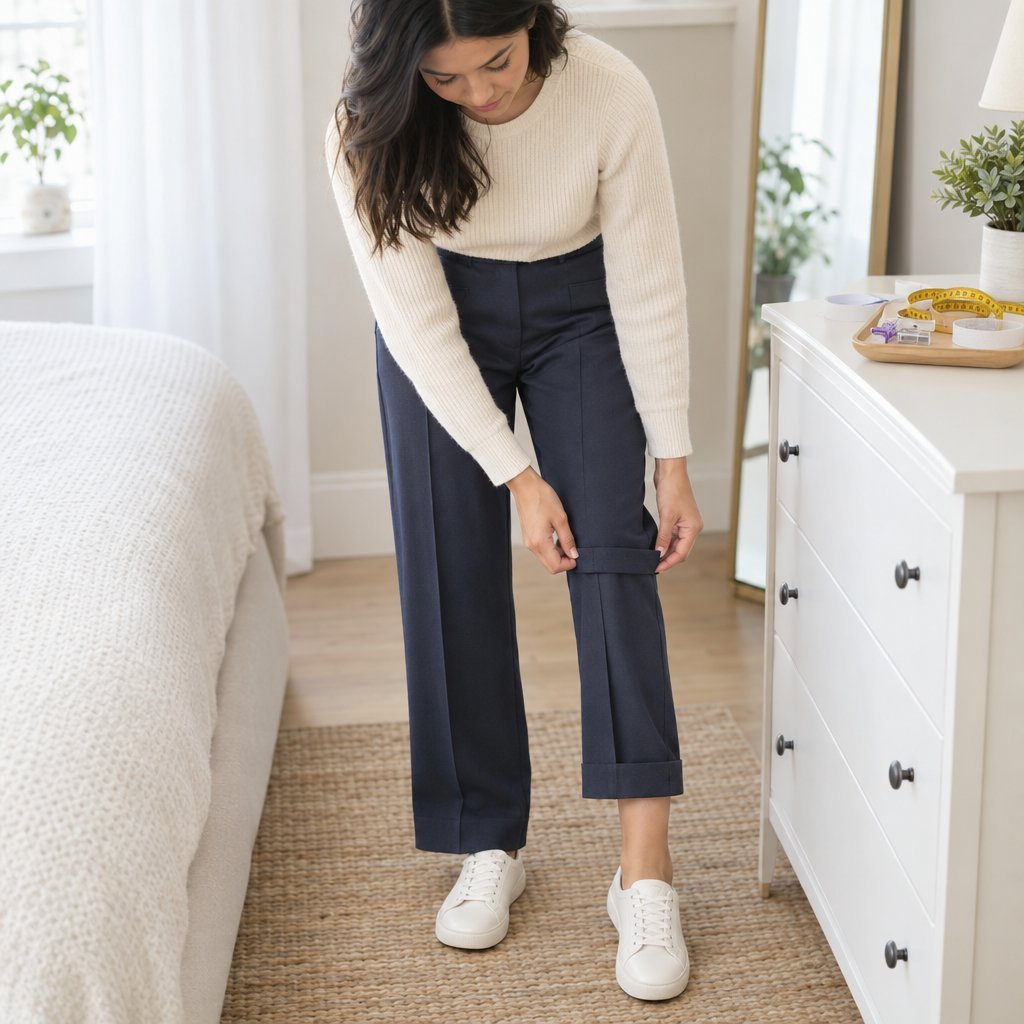
For a finish you plan to keep, use iron-on tape on iron-safe fabric and allow it to cool before testing. For a temporary fit check, secure the fold with clips or pins and reassess the length with your usual shoes.
Frequently Asked Questions
Does hemming tape actually work on pants?
Yes, hemming tape can hold a folded pant hem when the tape suits the fabric and you follow its pressing directions. Test it on a hidden area, and check the hem after washing according to the product label.
How can I make pants shorter without cutting or sewing?
Fold the excess fabric inside each leg and secure it with iron-on tape, fabric glue, clips, or pins. Measure while wearing your intended shoes so the finished length clears the floor and falls evenly.
What is the easiest no-sew hemming method for beginners?
Iron-on hemming tape is an easy option for beginners when the pants are safe to iron. It holds the fold inside the leg, and the package directions guide the heat and pressing steps.
Can I hem pants by hand without cutting them?
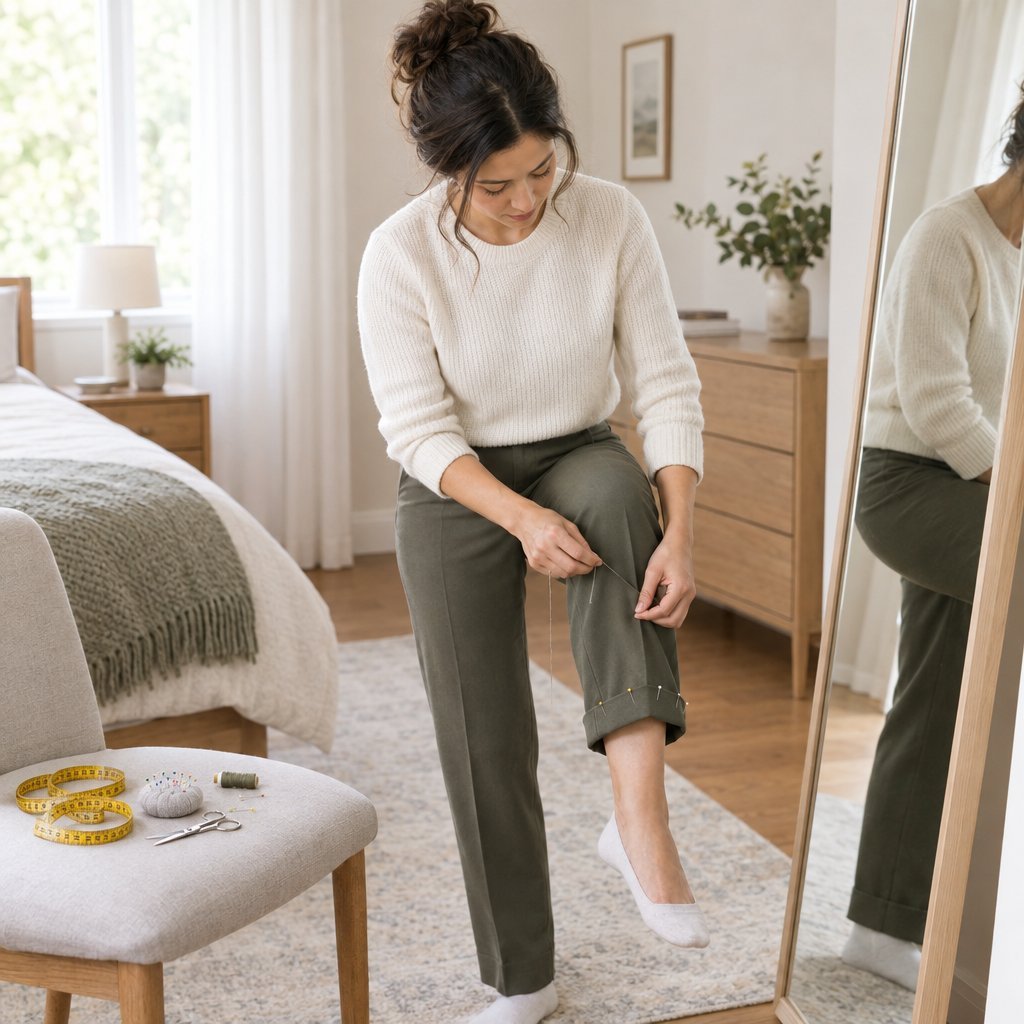
Yes, you can fold the extra length inside the leg and secure it with hand stitches while leaving the fabric intact. A simple hand-sewn hem also gives you a low-profile finish that you can remove later.
Can I get an invisible hem without a sewing machine?
You can make a low-visibility hem with iron-on tape or fabric glue placed inside a clean, even fold. Keep the adhesive hidden and test the method on the fabric first; hand sewing offers another discreet finish if you are comfortable using a needle and thread.
